
The Arbitration Vacuum
Customer decisioning’s oldest problem is returning in new clothes: when multiple AI agents compete for the same customer moment.

This editorial essay was first published at Customer Decisioning Guild on 18 May 2026 and cross-posted here at MarTech Square.
Over the coming months, I will also be investing significant focus into building the Customer Decisioning Guild as a practitioner-led community for customer decisioning leaders and builders. MarTech Square will absolutely continue, but the publishing cadence may become less predictable than the current weekly rhythm.
Stay connected.
Picture a four-way intersection at peak hour. Every car has a driver, a destination, its own private optimisation - fastest route, least fuel, avoid the school zone. The drivers are competent. The cars are new.
There are no traffic lights.

This is the agentic era of customer engagement in 2026. The road is full of agents. No signal at the intersection.
What is Happening
Every vendor out there is shipping AI agents. Salesforce ships Agentforce and, more interestingly, the Agent Fabric - the layer meant to let agents from different platforms talk to one another. MoEngage ships campaign decisioning agents. OfferFit (Braze) positions itself as an AI decisioning agent and analysts on agentic personalisation.
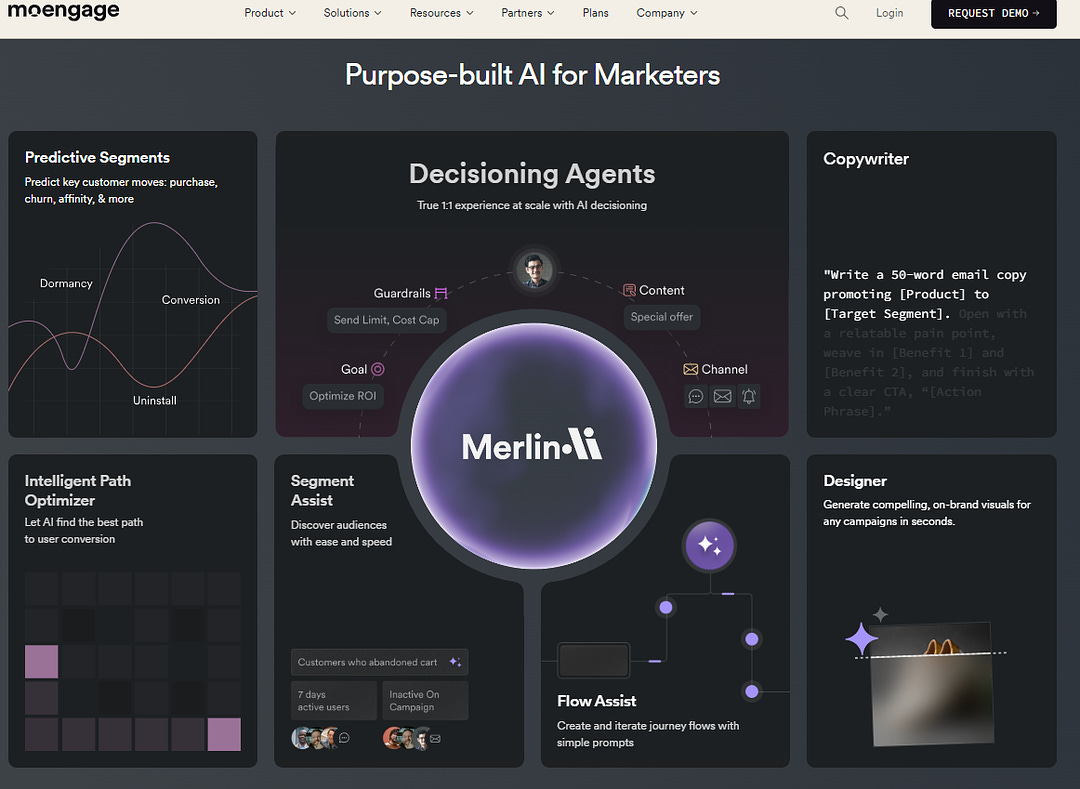
CEP, CDP, and MAP categories have converged on the same noun.
Different vendor’s decks start looking the same - sense, reason, act - in the same order. They sometimes even use the same stock photo of a neural mesh. The pitches have converged faster than the products.
What almost none of them is shipping is the layer that decides which agent wins when two of them want the same moment with the same customer.
A large enterprise I am familiar with runs Pega Customer Decision Hub in the contact centre, Braze for lifecycle, Adobe Journey Optimizer for offer orchestration, and is evaluating a CEP that brings its own decisioning agent. Four agents. One customer. No traffic light.
Frequency caps and cost caps are not a traffic light. They are a speed limit. They tell you how often any one car passes through, not which goes first when two arrive at once.
The Consensus and What it Misses
The consensus reading of 2026 is that the platforms are racing to ship agents and the practitioner’s job is to choose the best one. Analyst categories - AI Decisioning Platforms, Real-Time Interaction Management, Agentic CDP - are organised around that question.
The practitioner reading - if you have sat in the chair and watched two systems fire on the same customer in the same hour - is different. The question that matters is not who has the best agent. It is who arbitrates between them.
Salesforce has at least named the problem. Agent Fabric, first launched in September 2025 and expanded at TDX in April, is the clearest acknowledgement yet from a major vendor that multi-agent orchestration needs a referee - what Salesforce now calls “guided determinism.” The World Economic Forum’s March 2026 analysis frames the same territory as an accountability problem: in multi-agent ecosystems, decision rights have to be defined, or accountability becomes diffuse. Useful framings, both. But they treat the question as governance and infrastructure. It is also a discipline.
The Reframe
Arbitration between competing offers and channels is the founding problem of customer decisioning. Pega Customer Decision Hub has done it since the mid-2010s, SAS Customer Intelligence for longer. I have argued in two earlier pieces - The Customer Decisioning Vacuum and Who Decides When the AI Agent Decides? - that the discipline has been hollowed out by vendor categories and that agentic AI compounds the problem. This letter extends that argument. The vocabulary is older than the current vendor cycle. Pega has been using the framework of Eligibility, applicability, suitability, arbitration, and contact policy - five words, each with a defined function and a place in the sequence. Set them next to the agentic glossary - reasoning, planning, tool use, memory, alignment - and the difference shows. One vocabulary is built for choosing between options. The other is built for completing a task. Every agent in the current generation optimises against its own goal. Almost none is built with the awareness that another agent, in another platform, is optimising against a different goal for the same customer.
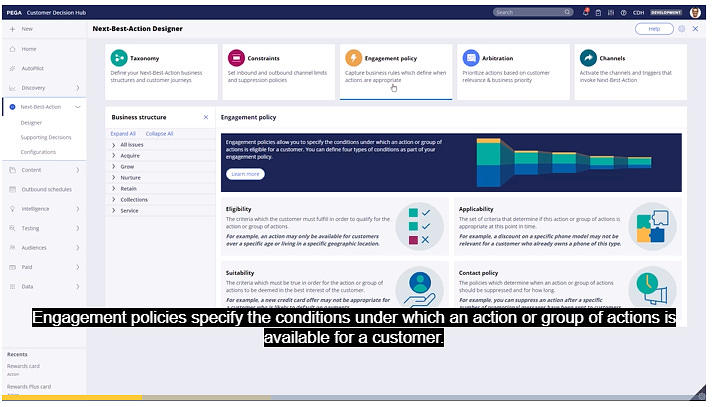
Eligibility: can this offer be made to this customer at all - the strict rules of what is legal or possible.
Applicability: does it fit the customer’s situation.
Suitability: is it appropriate, given what we know.
Arbitration: of the things that pass all three, which one wins right now, against a single value model, across channels.
The vacuum at the centre of the agentic stack is not a new problem awaiting a new vendor category. It is the oldest problem in the discipline, dressed in different clothes, and the incumbents who have most of the answer are not showing up to the question.
A fair objection: Pega and SAS have not actually arbitrated across competing agents from different vendors. The Customer Decision Hub decides between offers loaded into it. It does not decide between a Pega offer, a Braze journey and a third-party agent fired by an Adobe trigger. Cross-vendor arbitration across competing customer-engagement agents has not been built, by anyone, at scale. The discipline has the vocabulary, not the working system. And the reason is not technical. Arbitration takes authority away from the channel owners who currently hold it, and no architecture diagram has ever survived a Tuesday morning meeting between the email lead and the digital lead. The technical problem is the easier half.
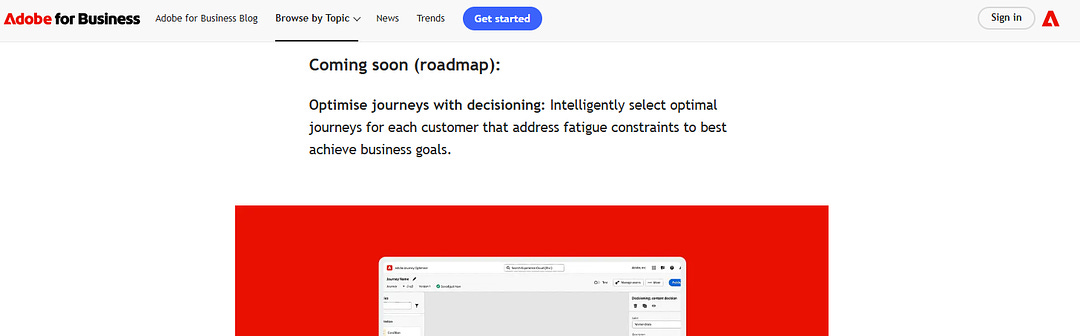
There are two vendors publicly pitching central arbitration. Insider One’s April 2026 piece argues that “siloed journey builders lack this central arbitration layer” and positions a unified platform as the answer. Adobe’s Journey Optimizer roadmap lists “AI journey arbitration” as coming soon. Both are right to claim the territory. The question is whether a CEP-class vendor can credibly hold the arbiter seat across the agents of other vendors, or only across its own channels. That is a question of trust and architecture, not capability marketing.
What This Means in Practice
When you next evaluate a CEP, CDP or lifecycle platform pitching AI agents with guardrails, the question to ask is not do you have an agent. It is: what happens when your agent and another vendor’s agent both fire on the same customer in the same hour, and your agent does not know the other one exists?
Press further. Ask the vendor to draw their arbitration model on a whiteboard - eligibility, applicability, suitability, value model, contact policy. If the answer is frequency caps and cost caps, you have a speed limit.
Then the harder question, for your own architecture. Which system in your stack is the arbiter? If you cannot name it in a sentence, you have a vacuum. The vacuum will be filled - either by deliberate architecture, or by whichever vendor is loudest in the executive briefing.
For the heads of decisioning and the lifecycle architects reading this - the discipline is being given back its vocabulary at the exact moment the executive briefing room cannot tell the difference between an agent and an arbiter. The opening closes the day a CEP names itself the arbiter and the room nods.
Invitation
What is your arbitration architecture today? Is there a single system that decides which message, in which channel, with which offer, for which customer, at which moment - or is it stitched from three vendors and a contact-policy spreadsheet?
Thought for Next fortnight: what an arbitration layer looks like when it is built properly, and what the cross-vendor version would need. If you have a war story - particularly one where two agents collided and the customer noticed - I would like to hear it.
The intersection is filling up. We can keep adding cars, or we can install the signal.
If this letter landed, the Customer Decisioning Guild is where the conversation continues. It is a small, practitioner-led community for the people who actually sit in the decisioning chair - not vendors pitching, not analysts categorising, but practitioners building. You can join at customerdecisioningguild.com.